October 07, 2026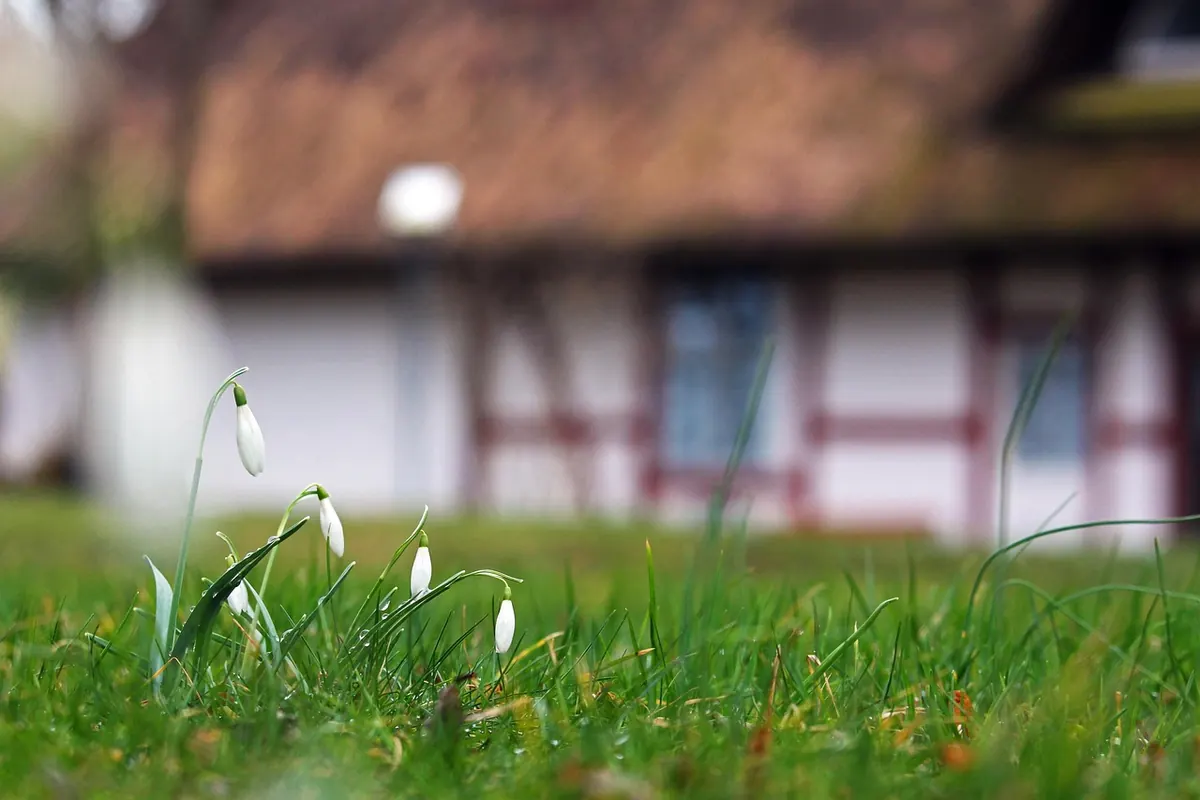
A cottage garden is not really a style so much as a habit: cram things in, let them lean on each other, and keep something in flower from March to November. The traditional version came with an acre, a hedge and a pig. Yours might be a six-by-eight-metre yard behind a terrace, with a fence on three sides and a shed taking up a corner. The spirit still travels.
What follows is a practical way to borrow the cottage look without importing its labour or its thirst. The trick is to keep the generosity and lose the sprawl.
The Principles Worth Keeping
Strip away the roses-round-the-door cliché and four ideas do most of the work.
- Density. Cottage planting is crowded on purpose. Packed plants shade their own roots, suppress weeds and look established faster.
- Repetition. A small garden needs rhythm more than variety. Three of the same plant, repeated along a border, holds a chaotic scheme together.
- No bare soil. Every gap is either planted or mulched. This is the single biggest time-saver in a small plot.
- Soft edges. Plants should spill over paths and crowd the fence line. Straight lines and neat gaps read as municipal, not cottage.
The original gardens were working plots: herbs near the door, cutting flowers along the path, a few vegetables tucked between the ornamentals. Keeping that logic gives you a garden that earns its space.
Read the Plot Before You Buy Anything
Most small-yard disappointment comes from planting for the garden you imagined rather than the one you have. Spend half an hour on a dry day doing this instead.
- Watch where sun falls at 10am, 1pm and 5pm. Note the hours of direct light in each corner.
- Squeeze a handful of soil. If it holds a tight ball that shines, you have clay; if it crumbles and feels gritty, you have sand; if it's dark and springy, you're lucky.
- Dig a spade-deep hole, fill it with water and see how long it takes to drain. Anything over a few hours means you need to plant for damp or improve drainage before you start.
- Note where wind funnels between buildings and where the fence throws shade.
- Look at what already grows well, including weeds. Fat, happy nettles and bindweed suggest rich, moist soil. Thrift and moss suggest the opposite.
Write it down. A five-line note about your own yard is worth more than an hour of browsing plant catalogues.
A Layout That Suits a Small Space
In a large garden, a cottage border can wander. In a small one, one clear move beats five timid ones. The classic pattern still works: a path that draws you from the door to the far end, with deep planting on both sides and something worth reaching at the finish — a bench, a pot, a small tree.
Make the path at least 60cm wide, 90cm if two people will pass. Curve it gently rather than snaking it; wide, slow arcs make a yard feel bigger, tight wiggles make it feel cramped. Then build borders in layers: low plants at the front, mid-height in the middle, tall plants and climbers at the back. A border a metre deep can hold all three if you choose compact varieties.
Use the Vertical Space
Fences are the largest surface in most modern yards and usually the most wasted. An obelisk with a climbing rose, a wigwam of runner beans, a wall shrub trained flat against a sunny wall, or a couple of hooks for hanging baskets all add planting space without eating any ground. Keep to one or two climbers rather than a mixed scramble, and paint the fence a single muted colour so the plants read against it.
Planting That Handles Real Weather
The old cottage palette assumed mild, damp summers. Many of us now get dry spells in July and heavy rain in February, sometimes in the same month. Choose plants that shrug at both, and you'll spend your evenings sitting in the garden rather than watering it.
Reliable, long-flowering options that suit dense cottage planting include catmint, lavender, salvias, cranesbill geraniums, thyme, oregano, sea holly, knautia, yarrow and hardy verbena. Add structure with rosemary, a compact viburnum or a small crab apple. For colour in shade, look at hardy geraniums, epimedium, hellebores and ferns.
Let Some Plants Sow Themselves
Self-seeders are the cottage gardener's best bargain: aquilegia, foxgloves, calendula, nigella, poppies and honesty will find their own gaps and return each year if you leave the seed heads standing into autumn. Thin the seedlings in spring if they crowd, and pull any that land somewhere you actually need to walk.
Whatever you choose, group plants by water need so you can soak one area deeply and leave another alone. Deep, occasional watering in the first two summers beats a daily sprinkle, because it encourages roots downwards. Mulch borders with compost or bark in spring to lock in moisture, and plant in autumn where you can — the soil is warm and the rain does the work for you.
Plant thickly, mulch heavily, and the garden will look after more of itself than you expect.
Containers and Clipped Edges
A cottage garden isn't formless. A pair of terracotta pots flanking the back door, a low clipped hedge along one boundary, or a single small tree in a large container gives the eye somewhere to rest. For clipping, yew, rosemary or a compact holly are steadier choices than box, which has been badly affected by blight in many areas.
Use containers where the soil is poor, where paving leaves no bed, or where you want to move colour around through the season. In small yards, fewer and bigger pots look better than a scatter of small ones, and they dry out more slowly too.
Keeping It Manageable
Spring: mulch, divide crowded perennials, sow hardy annuals. Early summer: stake anything floppy and water new plantings deeply once a week in dry spells. Late summer: cut back the worst sprawl, but leave seed heads on anything the birds use. Autumn: plant bulbs and any shrubs, and leave fallen leaves on borders as free mulch. Winter: prune, sharpen tools, and order seeds. That's the whole year in five lines, which is roughly the amount of effort a small cottage border deserves.
Start With One Border This Weekend
Choose the sunniest two metres of bed you own and give it the full cottage treatment, rather than half-doing the whole yard. Clear it, fork in two or three centimetres of compost, and plant in groups of three: something low at the front, something tall at the back, and one self-seeder for next year. Water it in well, spread mulch around the plants, and leave the rest of the garden alone until spring.
Do that once and you'll have a template. Repeat it next season along the next stretch of fence, and within two or three years the whole yard will be full — which is exactly the point.
Photo: KRiemer / Pixabay